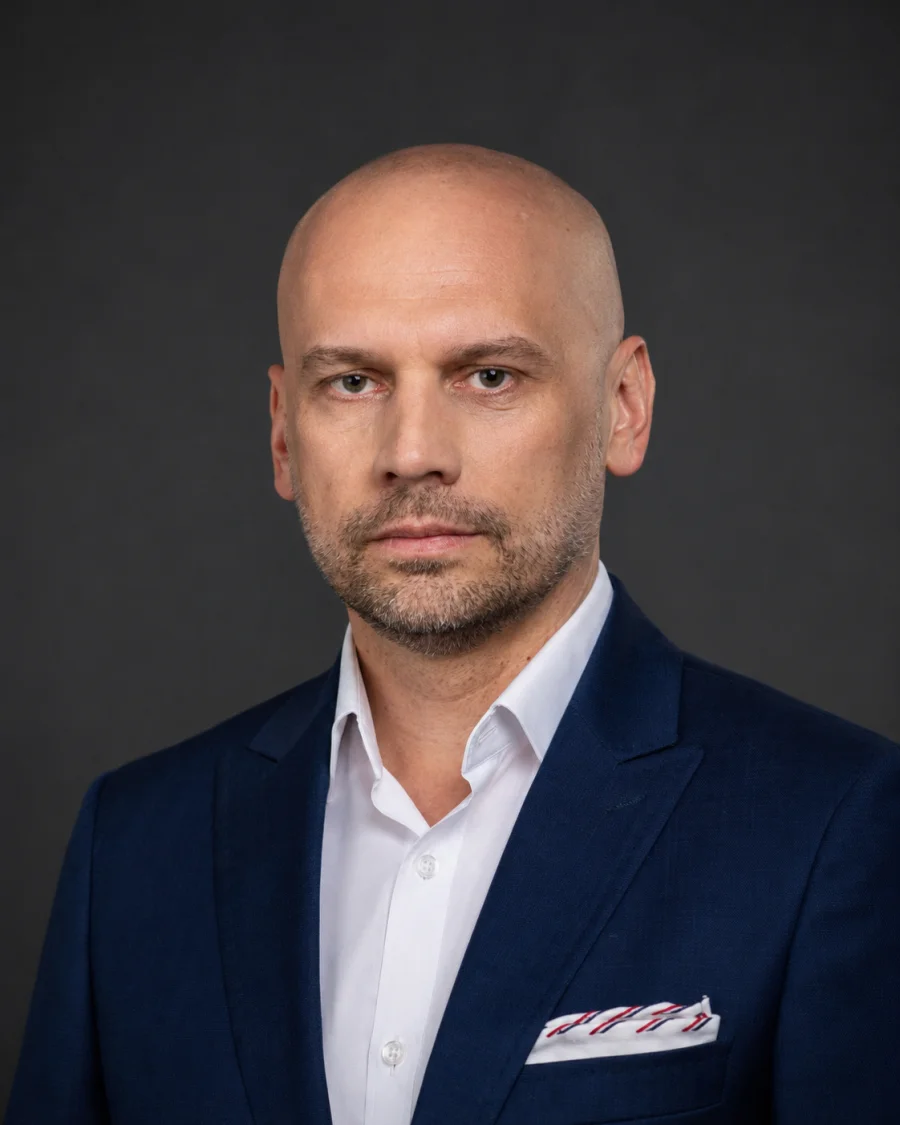
Responsible Partner
Michał Zwyrtek
Partner
Combines a financial, advisory and digital perspective in strategic and implementation projects.
Full profile
We support business owners, investors and management boards in business sales and acquisitions, mergers, takeovers and reorganisations of legal, ownership and operating structures. We manage projects from analysing the available options and designing the structure, through due diligence, valuation, negotiations and documentation, to closing, implementation and post-deal integration.
We combine transaction, legal, tax, financial, accounting and operational advisory. Our analysis covers not only price and transaction documents, but also financing, ownership structure, taxation, employees, contracts, processes and the organisation’s future operating model.
The team's experience covers more than 100 transactional and ownership projects delivered since 2003.
We support strategic investors, funds and company owners in identifying acquisition targets, assessing deal attractiveness, due diligence, acquisition structure and negotiations. We help assess not only price but also risk, synergies and the real capacity to integrate the target business.
We prepare company owners for the sale process: from organising data, structure and risk, through vendor due diligence, to running the process with investors. The goal is to increase the company's credibility, reduce negotiation risk and improve the quality of the owner's decision.
We help owners get the company in order before the sale process: documentation, results, tax and legal risk, reporting, ownership structure and the investment narrative. This makes the process more predictable and better controlled.
We run or coordinate legal, tax, financial and operational due diligence. We analyse not only historical data, but also the areas that affect price, security mechanisms, the seller's liability and post-transaction risk.
We prepare business and share valuations and financial models for negotiations, financing and ownership decisions, showing which assumptions drive value and how it changes across scenarios.
We help choose the transaction structure taking into account tax, law, financing, the liability of the parties, the flow of funds and the planned operating model after closing. In ownership transactions we also factor in succession, the Polish family foundation and wealth management after the sale.
We support the preparation and negotiation of transaction documentation, including the SPA, SHA, term sheet, letters of intent, representations and warranties, price mechanisms, earn-outs, escrow and clauses protecting the parties.
We coordinate signing and closing: conditions precedent, consents, financing, funds flows, escrow and price mechanisms such as locked box, completion accounts and earn-outs.
We help plan the first 100 days after closing: integrating processes, reporting, teams, systems, finance, corporate governance and communication. Well-designed integration often determines whether the transaction actually creates value.
For a business owner, selling the company is often one of the most important professional and financial decisions of their life. It involves far more than negotiating the price: preparing the company, choosing the right investor, tax consequences, protecting the family, planning wealth after the transaction and the owner's role after closing.
That is why in M&A projects we combine the transactional, tax, legal, financial and ownership perspectives. For private and family businesses we also take into account succession, the family foundation and family office.
On the buyer's side, the key is to understand what is really being acquired: results, risks, people, processes, clients, technology, contracts and integration potential. We help assess the target, run due diligence, design the structure and protect the buyer's interest in the documentation.
On the seller's side, what matters most is preparing the company for the process, organising the data, controlling communication with investors and limiting the risks that could lower the price or prolong negotiations. We help owners go through the sale process in an organised and informed way.
Gaps in reporting, bookkeeping quality and management data usually surface in due diligence and undermine the company's credibility.
Unsettled CIT, VAT, transfer pricing or WHT issues directly affect the price and the scope of the seller's representations.
Dispersed shareholding, disorganised shareholder relations and missing governance complicate negotiations and extend the process.
Putting the company in order only after an investor enters the process limits room for manoeuvre and weakens the negotiating position.
Poorly drafted price clauses, working capital, escrow and earn-out provisions generate disputes after the transaction has closed.
The lack of a realistic 100-day plan and process integration is one of the most common reasons the expected value is never achieved.
Without an earlier wealth, tax and family plan, the decision to sell can be harder than running the process itself.
Choosing an investor on price alone, without considering strategy, culture and the working model, often translates into problems after closing.
In transaction projects we combine the M&A practice with tax advisory, legal advisory and business advisory for companies. Where needed, we add an organisational diagnosis on the buyer's or seller's side.
A reorganisation should follow a genuine business objective: simplifying the structure, preparing for a sale or an incoming investor, succession, separating businesses, consolidation or a new management model. The legal form is a means, not an end.
Every reorganisation requires the legal, tax, accounting, employment and operational consequences to be coordinated. We manage it from the analysis of options, through documentation and registration, to implementation in accounting, contracts, systems and processes.
Whether assets qualify as an organised part of an enterprise (ZCP) always depends on the facts; we never assume it in advance.
No single holding model suits every group. We design the structure around the organisation's objective, scale and way of operating.
Before any formal process begins, we compare the available options. We analyse:
We do not assume tax neutrality in advance. Neutral or preferential treatment can only be identified once every condition of the specific transaction or reorganisation has been confirmed, including its business rationale.
A transaction or reorganisation may affect all of the following at once:
That is why we run each project as one team: transaction advisers, lawyers, tax advisers, finance specialists, accountants and process experts work to a shared timetable and a single risk register.
We take responsibility for the whole journey: from analysis and choice of structure, through documentation and negotiations, to closing or the reorganisation date, implementation in accounting, HR, contracts and systems, and integration afterwards.
We do not guarantee the price, the duration of proceedings, tax neutrality or the outcome of negotiations. We help you make decisions on the basis of complete information.
We handle domestic and cross-border transactions and reorganisations — from a few to several hundred million złoty in value. We tailor the scope of advisory to the scale of the project, the type of investor and the ownership situation.
Sale of the company, succession, preparing for the process.
Acquisitions that complement the portfolio, product or geographic expansion.
Portfolio add-ons, platform transactions, exits.
We support owners of family businesses considering a sale, a partial exit, succession, an investor coming in, or tidying up the capital structure before a generational change.
Preparing decisions, timetables and documentation for a transaction or reorganisation, and overseeing implementation.
Direct investments, holding structures and organising family wealth.
Consolidation, simplifying structures, carve-outs, centralising functions and cross-border reorganisations.
Acquisitions, due diligence, financing and integration of the acquired business.
Mergers, demergers, conversions and contributions in kind aligned with the business objective.
Ownership succession, investor entry, joint ventures and structures for international expansion.
We advise founders and entrepreneurs who have built a company over many years and need to organise the sale process, negotiations, transaction structure and the wealth consequences after exit.
Responsible Partner
Partner
Combines a financial, advisory and digital perspective in strategic and implementation projects.
Full profile
Responsible Partner
Partner
Co-founder of Zwyrtek Group. Specialises in M&A transactions, succession, family foundations and advisory for private and family businesses.
Full profileThe family foundation has become one of the most important tools for succession and asset protection in Poland. After its first years in operation, both its potential and practical challenges are becoming clear.
From 5 November 2026, a formal policy in a drawer is no longer enough. A new definition of workplace bullying, a lower burden of proof, minimum compensation and a duty of systematic prevention — what employers, HR and compliance teams need to implement in Poland.
Michał Zwyrtek explains how AI, digital transformation and organisational readiness can support succession in a family-owned business.
Establishing the business, ownership and operational objective.
Comparing models and their legal, tax, financial, accounting and employment consequences.
Choosing the solution, the sequence of steps, conditions and responsibilities.
Scope depending on the type of transaction or reorganisation.
Agreements, reorganisation plans, resolutions, consents, security and implementing documents.
Coordinating interdependent steps.
Translating the change into accounting, tax, employment, contracts, systems and processes, including a first-100-days plan.
Tell us about your business objective, current structure and planned change. We will help compare the available options and manage the process from preparation and negotiations to closing, reorganisation and implementation.